
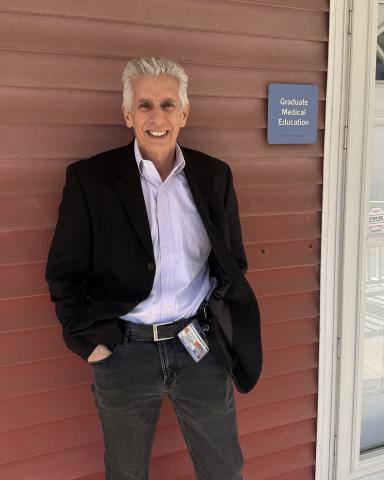
For Eduardo Constantino, MD, Mental Health Awareness Month is about more than education — it is about breaking the silence and reducing the stigma that still surrounds mental illness and addiction.
“This year’s focus is really on stigma and silence,” he explained during a recent conversation at Stony Brook Eastern Long Island Hospital (SBELIH). “Stigma lives in silence, and the healing process begins when people feel comfortable seeking help.”
As Program Director of the Psychiatry Residency Program at SBELIH, Dr. Constantino spends his time caring for patients, mentoring young physicians, and helping future psychiatrists better understand the importance of compassion, connection, and listening.
He believes one of the biggest challenges in behavioral healthcare remains the misconceptions people continue to have about mental illness. Many individuals still hesitate to talk openly about anxiety, depression, addiction, or other psychiatric conditions because of fear, embarrassment, or misunderstanding.
Dr. Constantino hopes conversations surrounding mental health continue to evolve in the same way society views other medical conditions — with support, treatment, and understanding rather than judgment.
At SBELIH, he says the behavioral health team works hard to create an environment where patients and families feel safe, respected, and heard. He also emphasizes that mental illness is far more common than many people realize, with anxiety disorders remaining one of the most frequently seen conditions.
Over the past several years, particularly following the COVID-19 pandemic, Dr. Constantino has seen how isolation and disconnection have affected emotional wellbeing across all age groups. That experience has reinforced for him the importance of human connection in healing.
“Healing means connection,” he shared. “People need support systems, families, friends, and communities.”
In addition to his clinical work, Dr. Constantino is proud of the continued growth of SBELIH’s Psychiatry Residency Program, which will graduate seven residents and fellows this year — more than double the number from the previous year. The program continues to train physicians not only in psychiatric treatment, but also in understanding the stories and experiences behind each patient.
That human connection remains one of the reasons Dr. Constantino continues to love the field after decades in psychiatry.
Rather than focusing solely on diagnoses or medications, he believes meaningful care begins with listening, understanding, and helping patients feel less alone.
For Dr. Constantino, Mental Health Awareness Month serves as an important reminder that seeking help is a sign of strength — and that breaking the silence around mental illness can help open the door to healing, hope, and recovery.